July 8, 2026·13 min read
How to Start a Mobile Bar Business: The Complete Guide
A mobile bar business is one of the most approachable ways into the events industry — if you get the equipment, licensing, pricing, and booking right. Here's the full path from idea to first paid event, step by step.

Updated August 6, 2026
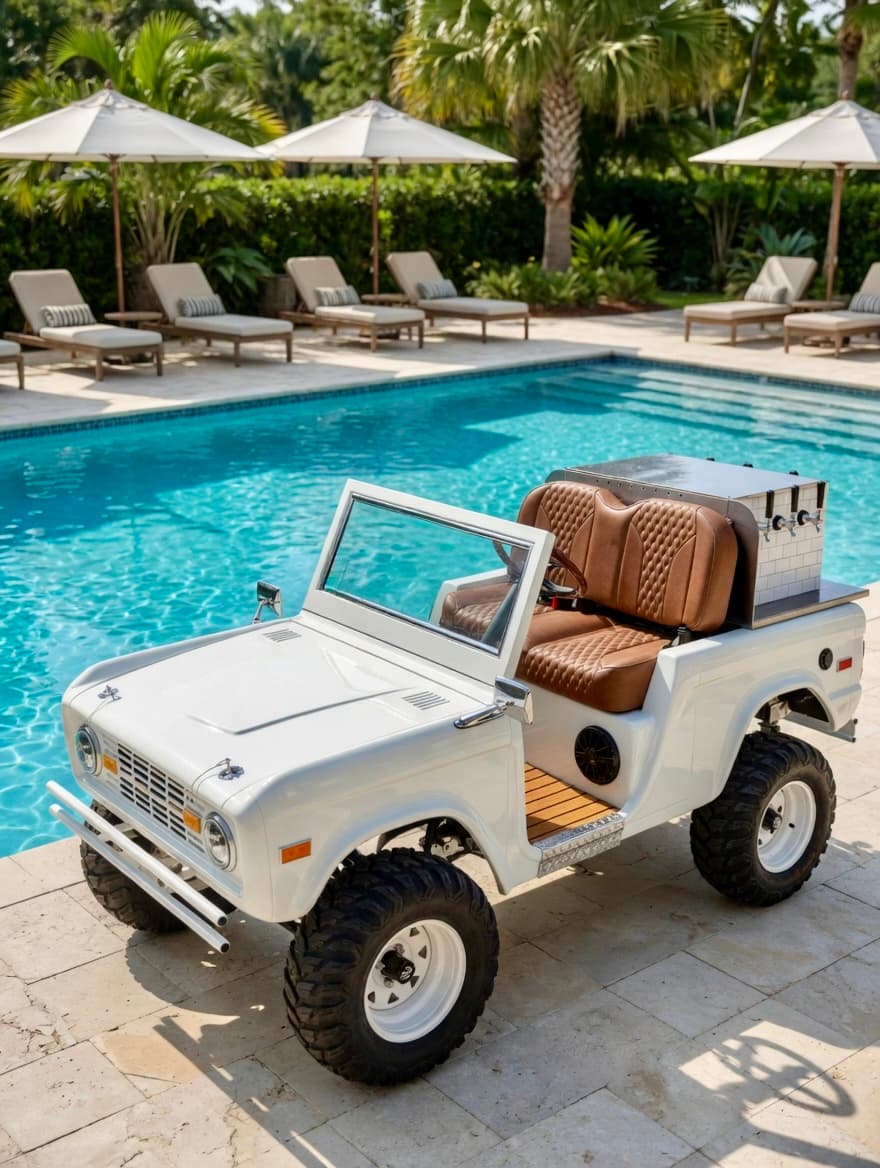
Starting a mobile bar business means building a small, mobile beverage-service company around a single, striking piece of equipment — a bar cart, trailer, or truck — that you bring to weddings, corporate events, and private parties. Done well, it's one of the most approachable ways into the events industry: low overhead, no storefront, and a product people are genuinely excited to book.
But "approachable" isn't the same as "simple." The people who struggle aren't the ones who bought the wrong cart — they're the ones who never sorted out licensing, priced their first events too low, or had no system for filling a calendar. This guide walks the whole path, in the order it actually matters.
In this guide:
- Decide what you're actually selling
- Choose your equipment — build vs. buy
- Handle licensing, permits, and insurance
- Build a pricing model that's actually profitable
- Name and brand the business
- Fill the calendar
- Run a clean, repeatable service
Plus: starting your own bar — mobile vs. brick-and-mortar, the mobile mixology angle, and how long it takes to launch.
#Starting your own bar — mobile vs. brick-and-mortar
If you're researching how to start your own bar business, the first fork in the road is bigger than any equipment decision: a fixed-location bar or a mobile one.
A traditional bar means a lease, a build-out, a full liquor license, staff, and six-figure startup costs before you pour a single drink — and it earns money only when people come to it. A mobile bar flips every one of those constraints: no lease, a fraction of the startup cost, licensing that's often simpler (especially under a service model), and a calendar you fill by going where the events already are — weddings, corporate parties, festivals.
That's why the mobile route has become the default answer for first-time bar owners. You get the identity and the craft of running your own bar, without betting your savings on foot traffic. The rest of this guide assumes the mobile path — here's how to do it right.
#Before anything: research your market and sketch the plan
Before you buy your first shaker, spend a week understanding your local market. Who's already operating, what do they charge, and what are they missing? If nobody nearby offers themed cocktail experiences or a genuinely premium cart, that gap is your opening. Defining your unique selling points early shapes everything downstream — branding, packages, and how you pitch venues. Our guide to defining your target market walks through choosing your lane.
Then sketch a business plan, even a simple one: estimated startup costs, equipment, permitting, marketing, and ongoing expenses. The more specific you are up front, the fewer surprises at launch. Use the free business plan template and startup cost calculator to put real numbers on it — our mobile bar business plan guide shows what to include.
#The five things every mobile bar business needs
Before the details, here's the whole business on one page. You need:
- Equipment — a bar you can transport, set up, and serve from professionally.
- Licensing and insurance — the legal right to serve at events in your area.
- A pricing model — packages that are profitable, not just competitive.
- A booking engine — a repeatable way to get in front of couples, planners, and companies.
- An operating system — how you source inventory, staff events, and deliver a clean service every time.
Miss any one of these and the business stalls. Let's take them in order.
#Step 1: Decide what you're actually selling
There are two very different mobile bar businesses, and they look almost identical from the outside.
- Dry-hire / bartending service: you provide the bar, the staff, and the service. The client buys the alcohol (or you facilitate it), which sidesteps a lot of liquor-licensing complexity in many states.
- Full beverage catering: you provide and sell the alcohol itself, which requires the appropriate liquor license and carries more regulation.
Most new operators start with the service model — it's faster to launch and lower-risk — then expand as they learn their local rules. Your choice here drives everything downstream, especially licensing.
The main types of mobile bars
Alongside the business model, it's worth knowing the physical formats you might roll out:
- Bar carts. Compact, striking, and maneuverable — they fit venues a trailer can't reach (ballrooms, rooftops, tight patios) and set up fast.
- Cocktail trailers. Fully outfitted trailers suited to big outdoor events, with more built-in storage but bigger towing, parking, and venue-access requirements.
- Bar trucks and vans. Converted vehicles with wow factor, at the cost of vehicle maintenance and the most restrictive venue access.
- Pop-up bar stations. Portable setups for smaller gatherings or spaces where nothing on wheels fits.
Your format shapes which events you can serve and the impression you make. A cart hits the sweet spot for most operators: premium presence at weddings and corporate events, without the logistics of hauling a trailer.
#Step 2: Choose your equipment — build vs. buy
Your bar is the product. It's what gets photographed, tagged, and remembered, and it's the single biggest decision you'll make. The real question is whether to build one yourself or buy a finished, commercial-grade unit.
| Build it yourself | Buy a finished cart | |
|---|---|---|
| Upfront cost | Lower on paper | Higher, all-in |
| Time to launch | Months of fabrication | Weeks to delivery |
| Finish quality | Depends on your skills | Commercial standard |
| Photographs well | Hit or miss | Designed for it |
| Support and playbook | You're on your own | Included with the right program |
A DIY build can work if you have the fabrication skills and time. But the hidden cost is everything that isn't the cart: the pricing knowledge, the venue relationships, the operational systems. A good turnkey program bundles the equipment with the business know-how — which is the part that actually determines whether you succeed.
For a deeper breakdown of the up-front numbers, see our guide to the cost of starting a mobile bar business — or run your own figures through the free mobile bar startup cost calculator.
#Step 3: Handle licensing, permits, and insurance
This is the step people avoid and later regret. Requirements vary by state, county, and even venue, but almost every mobile bar business needs some combination of:
- A registered business entity (LLC is the common choice) and a business license.
- Liquor liability insurance — often called liquor legal liability — plus general liability. Many venues won't let you on-site without proof of coverage.
- Event or catering permits, sometimes pulled per-event, sometimes held annually.
- A liquor license or server permits, if you're selling or serving alcohol directly, plus certified bartenders (TIPS or ServSafe Alcohol) depending on your state.
Regulations also vary at the city level: some cities require extra permits to operate on public property or at events over a certain size, and some areas require health permits covering prep areas, hand-washing, and safe transport of perishables. Track down every permit your venues and cities require, and keep the documentation handy — many venues and clients will ask for proof before you're allowed on site.
Don't guess here. A short call with your state's alcohol beverage control (ABC) board, or a local attorney who knows events, will save you from the expensive kind of mistake. We cover this in detail in our mobile bar licensing and insurance guide.
#Step 4: Build a pricing model that's actually profitable
New operators routinely underprice. They look at what the cheapest competitor charges, undercut it, and end up working events for near-nothing once inventory, staff, travel, and setup are accounted for.
Price from your costs and the value of the experience, not from fear. A typical mobile bar package is built from:
- A base service fee (your time, the cart, setup and teardown).
- Per-guest or per-hour scaling for larger events.
- Add-ons: signature cocktails, extra staff, custom menus, travel beyond a set radius.
The goal is a package that pays you properly for a full day of work and leaves margin. Our mobile bar pricing guide walks through how to set rates that hold up.
#Step 5: Name and brand the business
Your name and branding are marketing assets, not afterthoughts — they're what a couple screenshots and sends to their planner. Aim for a name that's memorable, easy to spell, available as a domain and social handle, and not boxed into a single city if you plan to travel.
Stuck on ideas? Our mobile bar name ideas post has a naming framework and dozens of directions to riff on.
#Step 6: Fill the calendar
Equipment gets the attention, but booking is what makes it a business. The channels that reliably work for mobile bars:
- Venue relationships. Get on the preferred-vendor lists at wedding and event venues. One good venue can send you a dozen bookings a year.
- Planner and caterer referrals. They book the same trusted vendors repeatedly.
- Instagram and Pinterest. This is a visual product — your feed is your portfolio. Tag venues and post from every event.
- The couples marketplaces (The Knot, WeddingWire, Zola) for wedding-heavy markets.
- Corporate and brand activations, which often pay more and book on shorter timelines.
Don't stop at being visible — make the brand work online. A well-maintained Google Business Profile, loaded with photos and reviews, puts you in front of anyone searching "mobile bar" in your area. Partner strategically, too: planners and venues without their own bars are steady referral sources, and a simple referral incentive can turn one good relationship into a season of bookings.
The through-line is proof. Great photos, real reviews, and a fast, professional response to every inquiry win more than the lowest price does. Demand is on your side — the market for mobile bars keeps growing — but it flows to the operators who look professional and respond first.
#Step 7: Run a clean, repeatable service
Once you're booking, consistency is the moat. The operators who grow have a system for the parts that don't change event to event: an inventory and shopping process, a setup and teardown checklist, a service standard, and a plan for staffing a second (or third) event on the same weekend. Systematize it early and you can scale without the quality slipping.
The service side of that system is what clients actually experience, and it breaks down into a few disciplines — each covered in its own guide:
- Presentation and punctuality — the first five minutes on site do most of the selling.
- Pre-event communication — every day-of disaster starts as an unasked question.
- Tailored menus and event customization — the details that make a bar memorable and justify premium packages.
- Quality ingredients and tools — source like a chef, prep like a pro.
- Customer feedback — every event is free market research if you collect it.
- Controlling operating costs — the everyday expenses are where margin quietly leaks.
Scaling comes from the same systems: expand your service area, add specialized stations (coffee, mocktail, margarita bars), or staff multiple events per weekend — all of it only works if your process delivers the same polish whether you're running one event or five. Staying adaptable to trends and feedback is what keeps those systems pointed at what clients actually want next.
For a broader pre-launch checklist, our top 10 things to consider before opening a mobile bar business is a useful companion to this guide.
#What about a mobile mixology bar?
A growing slice of this market brands itself around mobile mixology — craft cocktails, fresh ingredients, signature menus designed per event — rather than a general-service bar. If you're wondering how to start a mobile mixology bar specifically, the launch path is identical to everything above: same equipment decision, same licensing categories, same booking channels. What changes is the offer.
A mixology-forward positioning means:
- Menu as product. You sell a curated cocktail experience — a consultation, a custom menu, batched syrups and fresh garnishes — not just staffed service. Clients pay more for it.
- Skills or staff. Either you learn classic technique (balance, batching, speed) or you hire bartenders who have it. Certification like TIPS still applies; craft skill is what differentiates.
- Pricing power. Signature-cocktail packages are natural premium add-ons, which is exactly where margin lives in this business.
- The cart still matters most. At a wedding, the photographed moment is the bar itself. A striking cart with a craft menu is the strongest version of this business.
Mixology is a positioning choice on top of a mobile bar business, not a different business. Nail the fundamentals in this guide and the mixology angle is a branding and menu decision you can make — or change — at any time.
#How long does it take to start?
If you're building everything from scratch — fabricating a cart, sorting licensing cold, learning pricing by trial and error — realistically a few months to your first event. With a turnkey program that ships a finished cart and hands you the manuals and training, operators are often booking their first event within weeks of the cart arriving.
FAQ
How much does it cost to start a mobile bar business?
It depends heavily on whether you build or buy your equipment. A DIY build can start in the low five figures but carries hidden costs in time and finish quality. A turnkey program like Vintage Bar Co is $51,999 all-in — cart, branding, manuals, training, and support — with a 50/25/25 payment schedule and financing available.
Do you need a license to start a mobile bar business?
Almost always, yes — some combination of a business license, liquor liability insurance, and event or liquor permits depending on your state and whether you serve or sell the alcohol. Check with your state's ABC board before your first booking.
Do you need bar experience to start a mobile bar business?
No. Many successful operators start with no hospitality background. What matters is a system for pricing, booking, and service — which a good operating program provides through manuals and training.
Is a mobile bar business worth it?
Mobile bars have low overhead compared to a brick-and-mortar bar and serve a growing events market. Whether it's worth it for you comes down to execution — getting equipment, licensing, pricing, and booking right — not the concept itself.
Is it cheaper to start your own bar or a mobile bar?
A mobile bar, by a wide margin. A brick-and-mortar bar typically requires a lease, build-out, and full liquor license — often several hundred thousand dollars before opening. A mobile bar business launches for a fraction of that, with simpler licensing under a service model, and goes to where the customers already are.
Is running a mobile bar business profitable?
It can be. Mobile bars carry far lower overhead than a brick-and-mortar bar and serve a growing events market, so the earning potential is real — but profitability depends on execution: pricing from your true costs, booking the right events, and delivering service that earns reviews and referrals. Operators who underprice or skip the systems work are the ones who struggle.
What types of events use mobile bar services?
Weddings, corporate events, and private parties are the core, but mobile bars increasingly serve festivals, fundraisers, galas, pop-up markets, brand activations, and community events. The more creatively you match your setup to event types, the fuller the calendar.
Can a mobile bar business operate without serving alcohol?
Absolutely. Mocktail bars, specialty coffee carts, and themed non-alcoholic drink stations are a growing niche for daytime celebrations, wellness events, and corporate functions. Going alcohol-free sidesteps liquor licensing entirely while keeping the style and service of a mobile bar.
Tagged
Related reading
Jul 3, 2026
How to Write a Mobile Bar Business Plan (With Template)
A mobile bar business plan doesn't need to be 40 pages — it needs to answer the questions that decide whether the business works. Here's a section-by-section template covering concept, market, operations, pricing, and financials.
Aug 6, 2026
How Important Is Communication with Clients Before an Event?
Pre-event communication is the insurance policy for a smooth event. The touchpoints that build trust, surface curveballs early, and leave nothing to figure out on the day.
Aug 6, 2026
How to Collect and Use Customer Feedback in Your Mobile Bar Business
Feedback is free market research — if you actually collect it. Simple systems for gathering client input after every event, and how to turn it into better packages, better reviews, and more bookings.