
July 6, 2026·3 min read
Mobile Bar Pricing: How Much to Charge for Your Services
The fastest way to sink a mobile bar business is to underprice it. Here's how to build packages that are profitable — base fees, per-guest scaling, add-ons, and the mistakes that quietly erase your margin.

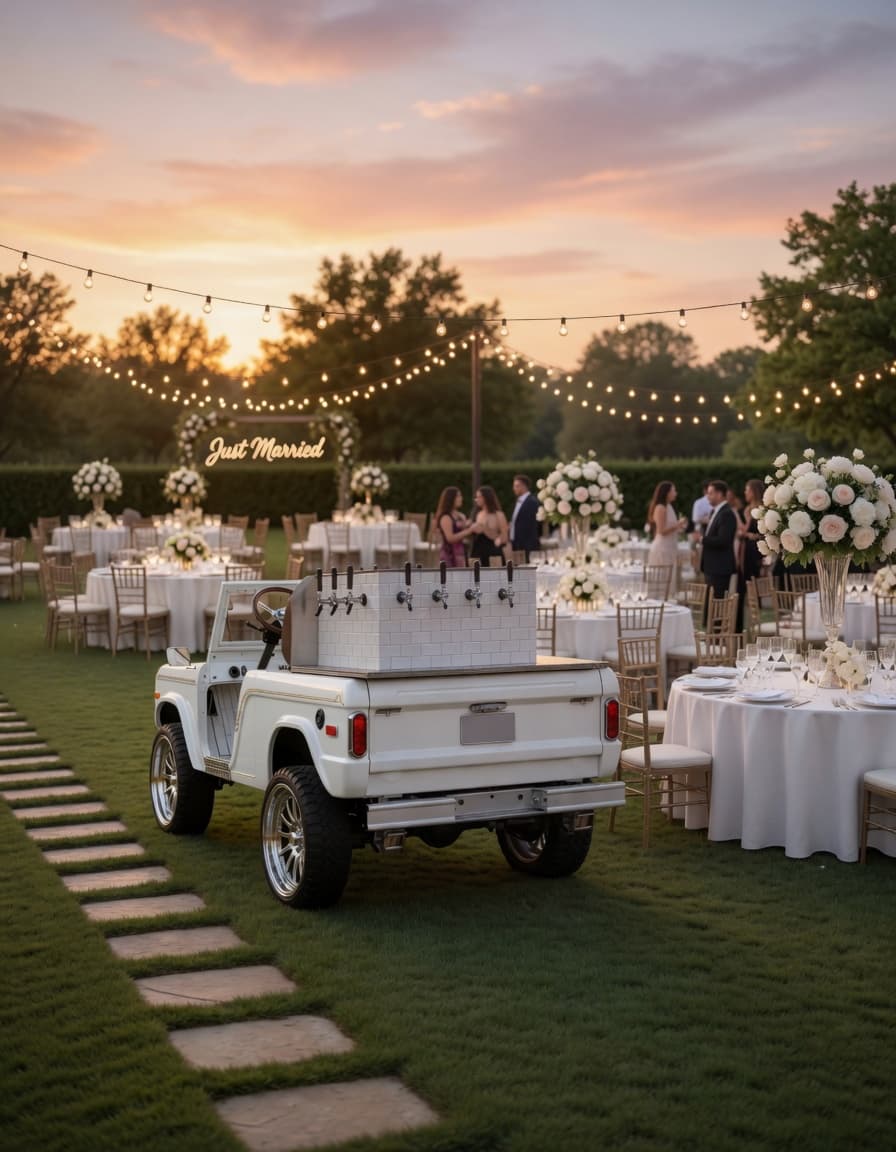
Most new mobile bar operators underprice, and it's the quiet reason so many burn out. They look at the cheapest competitor, undercut them, and discover — after inventory, staff, travel, setup, and teardown — that a full day of work barely cleared costs. This guide shows how to price so every booking actually pays you.
#Price from costs and value, not fear
There are two honest inputs to a price: what the event costs you to deliver, and what the experience is worth to the client. Competitor pricing is a sanity check, not a starting point. If you anchor on the lowest bidder, you inherit their margin problem.
#The anatomy of a mobile bar package
Nearly every profitable package is built from the same three layers:
- A base service fee. This covers your time, the cart, transport, setup, and teardown for a standard event window (commonly 4–5 hours). This is your floor — it should be profitable even for a small event.
- Per-guest or per-hour scaling. Larger headcounts and longer events mean more product, more labor, and more wear. Scale the price with them.
- Add-ons. This is where margin lives: signature cocktails, custom menus, additional bartenders, premium glassware, extended hours, and travel beyond a set radius.
#What actually goes into your cost per event
Before you can set a floor, know your true cost to serve. For a single event, add up:
- Labor — your hours plus any staff, including travel and setup/teardown time, not just service hours.
- Inventory — mixers, garnishes, ice, glassware or disposables, consumables.
- Transport — fuel and mileage, both ways.
- Overhead allocation — a slice of your insurance, storage, marketing, and payment fees.
- A margin — the profit that makes this a business, not a hobby.
If your base fee doesn't comfortably cover all of that for a typical event, it's too low.
#Common pricing mistakes that erase margin
- Charging service hours only. A "4-hour event" is really 7–8 hours of your day once you count load-in and teardown. Price the whole day.
- Free travel. Set a radius; charge beyond it. Distant events quietly cost you the most.
- Undercharging for add-ons. Signature cocktails and extra staff are where clients happily spend — don't give them away.
- No minimum. A minimum booking fee protects you from small events that cost as much to service as large ones.
- Forgetting fees and taxes. Payment processing and sales tax come out of the top; build them in.
#Raising prices as you grow
Your first few events are as much about photos and reviews as revenue. That's fine — but treat those rates as an introductory floor, not your permanent ceiling. As your calendar fills and your portfolio strengthens, raise rates deliberately. Demand at your current price is the signal it's time.
For the full picture around pricing, see how to start a mobile bar business and the cost of starting a mobile bar business.
FAQ
How much should I charge for a mobile bar?
Build a package from a profitable base service fee (covering your time, the cart, setup, and teardown), then scale by guest count or hours and layer in add-ons. Price from your real cost to serve plus margin — not by undercutting the cheapest competitor.
What is a typical mobile bar minimum?
Most operators set a minimum booking fee so small events still cover a full day of work. The exact number depends on your market and costs, but the principle is universal: never book below your profitable floor.
Should I charge for travel?
Yes. Set an included radius and charge a per-mile or flat travel fee beyond it. Distant events are often your least profitable if travel is free.
Related reading
Aug 6, 2026
How Important Is Communication with Clients Before an Event?
Pre-event communication is the insurance policy for a smooth event. The touchpoints that build trust, surface curveballs early, and leave nothing to figure out on the day.
Aug 6, 2026
How to Collect and Use Customer Feedback in Your Mobile Bar Business
Feedback is free market research — if you actually collect it. Simple systems for gathering client input after every event, and how to turn it into better packages, better reviews, and more bookings.
Aug 6, 2026
How to Tailor Drink Menus to Different Event Themes
Generic drink lists are easy — and forgettable. How to build every menu like a playlist: matched to the occasion, the season, and the crowd, with a signature cocktail that tells the event's story.